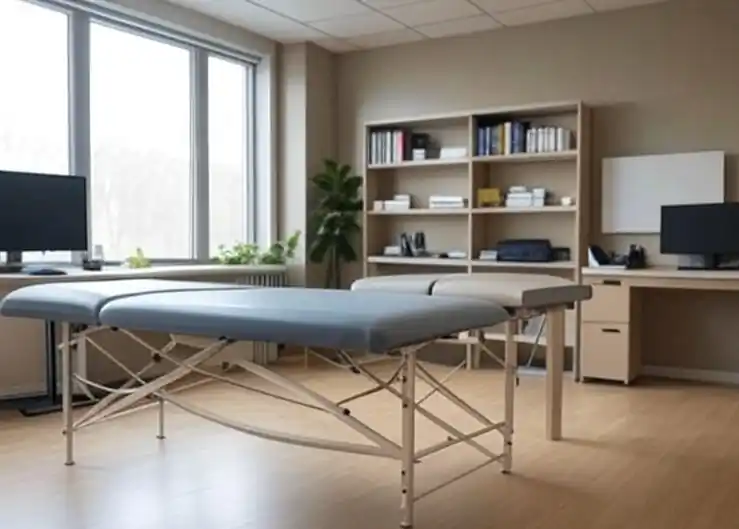
The layout of a physiotherapy practice significantly influences the quality of care and patient satisfaction. Studies in environmental psychology show that the physical space affects stress, anxiety, and treatment adherence. A well-designed environment directly contributes to therapeutic effectiveness and the well-being of everyone involved.
This article presents the fundamental principles for designing an optimal therapeutic environment that combines functionality, comfort, and professionalism. From the initial design to the finishing touches, every element must be considered to serve the therapeutic mission while creating a positive experience for both patients and practitioners.
Summary
- Scientific foundations of the therapeutic environment
- Ergonomics and safety: essential priorities
- Adapted to your specialty
- Reasoned technological integration
- Patient comfort and well-being
- Universal accessibility
- Sustainability and environmental responsibility
- Practical and budgetary aspects
- Phyzio.ch: the digital tool that adapts to your space
- Key points to remember
- Frequently Asked Questions
Scientific foundations of the therapeutic environment
Research in neuroscience and environmental psychology demonstrates that the physical environment directly influences healing processes. An appropriate setting can:
Reduce anxiety
Soothing colors and natural light reduce cortisol, the stress hormone. Neutral and warm tones promote relaxation, while overly bright or poorly directed lighting can create tension.
Improve treatment adherence
A professional environment strengthens a patient's trust in their therapist. Cleanliness, organization, and modern equipment convey a message of competence and professionalism.
Facilitating communication
A suitable layout promotes therapeutic exchange. Intimate spaces allow for confidences, while controlled acoustics preserve the discretion of consultations.
Optimize results
Stress reduction improves functional recovery. A relaxed patient better mobilizes their healing resources and participates more actively in their rehabilitation.
These effects, well-documented in the medical literature, justify the attention paid to the design of healthcare spaces. Investment in layout translates into measurable benefits in terms of patient satisfaction and therapeutic effectiveness.
Ergonomics and safety: essential priorities
For the therapist
The ergonomics of the workstation determine the quality of care and the prevention of musculoskeletal disorders in healthcare professionals:
- Treatment tables adjustable in height and tilt to adapt to all therapeutic procedures
- Directional lighting to avoid shadows during examinations and procedures
- Non-slip and easy-to-maintain floors, resistant to disinfectants
- Ergonomically sized storage for frequently used equipment
- Sufficient circulation space (minimum 120 cm between equipment) to avoid forced movements
For the patient
Patient safety and comfort are priorities in the design:
- Clear and high-contrast signage to facilitate wayfinding, especially for the elderly
- Grab bars in transfer areas (toilets, changing rooms, treatment rooms)
- A stable temperature between 20-22°C ensures comfort and effective treatment.
- Controlled acoustics to preserve privacy and avoid noise pollution
- Uniform, glare-free lighting, adjustable according to activities
Standards and regulations
Compliance with Swiss standards is mandatory and guarantees an optimal level of safety. This includes standards for accessibility, fire safety, hygiene, and data protection.
Adapted to your specialty
Each physiotherapy specialty has its own specific requirements that must be integrated from the design stage:
Sports physiotherapy
- Durable and easy-to-clean materials to withstand heavy use
- Visible functional rehabilitation equipment to motivate patients
- A dynamic yet not aggressive atmosphere, reflecting the sporting spirit
- Space for movement demonstrations and group exercises
- Spacious changing rooms with secure lockers
Perineal rehabilitation
- Enhanced privacy (closed booths, superior soundproofing)
- A calming, non-medical atmosphere to reduce anxiety
- Soft-to-the-touch materials, reassuring colors
- Indirect and adjustable lighting to create a serene atmosphere
- Direct access to restrooms from the treatment rooms
Geriatrics
- High visual contrast for signage and visual cues
- Seats with armrests and an adapted height to facilitate transfers
- Non-slip flooring with visual markers to prevent falls
- Slightly higher temperature (22-24°C) suitable for the elderly
- Intermediate rest areas for long journeys
Pediatrics
- Furniture and equipment scaled to children's size
- Playful and reassuring decoration
- Materials that are easily washable and disinfectable
- Therapeutic play area
- Separate waiting area for parents
Reasoned technological integration
Technology must serve therapeutic effectiveness without creating barriers or unnecessary complexity:
Diagnostic tools
- Biofeedback systems for postural education and rehabilitation
- Balance and gait assessment platforms
- Connected home exercise tracking apps
- Tools for measuring joint strength and range of motion
Administrative management
- Integrated planning software to optimize organization
- Digital payment systems to simplify transactions
- Secure and accessible electronic patient records
- Patient communication tools (reminders, information)
Digital infrastructure
- High-performance and secure Wi-Fi network
- Medical data backup system
- Information and entertainment screens in the waiting area
- Soft sound system to mask noise
Key principle: each technology must meet a specific need and be easily usable by all patients, regardless of their age or level of familiarity with digital technology.
Patient comfort and well-being
WAITING ROOM
The first contact with the practice, the waiting room, sets the tone for the patient experience:
- Ergonomic seats with lumbar support for the comfort of waiting patients
- Professional journals and educational materials on health and prevention
- Children's area if needed, with quiet and safe games
- Easily accessible water point and refrigerated fountain
- Natural lighting complemented by soft artificial lighting
- Green plants to improve air quality and atmosphere
Treatment rooms
At the heart of therapeutic activity, these spaces must combine functionality and comfort:
- Efficient ventilation without drafts to maintain optimal air quality
- Visual and sound privacy guaranteed by appropriate soundproofing
- Hypoallergenic materials for contact surfaces
- The ambiance can be adjusted according to needs (lighting, temperature).
- Storage space for patients' personal belongings
- Easy access to equipment without cluttering the space
Transition spaces
- Secure and spacious individual changing rooms
- Accessibility-compliant restrooms
- Corridors wide enough for mobility aids
- Intuitive and reassuring signage
Universal accessibility
Beyond legal obligations, universal accessibility benefits all patients and improves the professional image of the practice:
Exterior access
- Level entry or standard access ramp (maximum slope 6%)
- Automatic or easy-opening doors (minimum width 85 cm)
- Parking spaces reserved for people with reduced mobility in the immediate vicinity
- Obstacle-free and well-lit outdoor pathway
Interior design
- Accessible toilet with sufficient maneuvering space (150 cm in diameter)
- Suitable heights for switches, handles and dispensers
- Non-slip flooring with tactile markers for level changes
- Enhanced lighting in traffic areas
Sensory aids
- Tactile signage for visually impaired people
- Hearing loop for hearing aids in the reception area
- Strong visual contrasts to facilitate reading
- Information available in large print
These facilities also benefit people with strollers, luggage or temporary mobility difficulties.
Sustainability and environmental responsibility
Environmental commitment is becoming a selection criterion for many patients and helps to reduce operating costs:
Materials
- VOC-free coatings for indoor air quality and occupant health
- Local materials to reduce the carbon footprint and support the regional economy
- Ecological certification of equipment when available (FSC, PEFC labels, etc.)
- Durable materials requiring little maintenance
Energy
- Programmable LED lighting based on occupancy and natural light
- Enhanced insulation to limit heat loss
- High-performance heating/cooling system with intelligent programming
- Rainwater harvesting for outdoor maintenance and watering
Waste management
- Selective sorting adapted for medical and general waste
- Effective and healthy eco-friendly cleaning products
- Reduce disposable consumables whenever possible
- Partnerships with specialized recycling channels
Economic benefits
These sustainable choices generate long-term savings: reduced energy bills, less wear and tear on materials, and a positive image with environmentally conscious patients.
Practical and budgetary aspects
Priority planning
A structured approach allows for optimal investment:
Level 1 - Safety and ergonomics: non-negotiable investments
- Compliance with accessibility and safety standards
- Functional and ergonomic basic equipment
- Suitable ventilation and lighting system
Level 2 - Functionality: improvements that enhance efficiency
- Optimizing storage spaces
- Basic technological tools
- Soundproofing of treatment rooms
Level 3 - Comfort: elements that enhance the patient experience
- Carefully chosen decor and ambiance
- Additional comfort features
- Advanced diagnostic and treatment technologies
Level 4 - Aesthetics: finishes that personalize the space
- Custom design elements
- Premium materials
- Landscaping
Economic solutions
- Gradual renovation by zone according to priorities and available funds
- Refurbished used professional furniture
- Local partnerships with artisans and suppliers to negotiate prices
- Staggered financing for expensive equipment
- Purchasing groups with other professionals
Time planning
Plan the renovation steps to minimize the impact on business operations:
- Phase 1: Structural work and compliance upgrades
- Phase 2: Technical installations (electricity, plumbing)
- Phase 3: Cladding and partitioning
- Phase 4: Equipment and furniture
- Phase 5: Decoration and finishing touches
Phyzio.ch: the digital tool that adapts to your space
A well-designed practice deserves equally effective management tools. Phyzio.ch is a Swiss physiotherapy software that integrates seamlessly into your modernized therapeutic environment, regardless of your space's layout.
Adapted to your layout:
- Responsive interface that adapts to all your screens (computers, tablets, smartphones)
- Optimized scheduling system for multi-room or single-room practices
- Flexible resource management (rooms, specialized equipment) according to your organization
- Patient records are accessible from anywhere in the practice via the secure cloud.
- Digital communication tools to reduce paperwork
Optimizing space and time:
- Online calendar to reduce trips back and forth to reception
- Automatic reminders (SMS, email) to reduce absences
- Electronic invoicing to limit physical archiving
- Dashboards to optimize the use of your spaces
Whether you're setting up a new office or renovating your existing spaces, Phyzio.ch supports you in digitizing your processes. Our solution adapts to your organization and helps create a modern and efficient work environment.
Integrating Phyzio.ch into your development project means anticipating future needs and offering your patients a complete experience, from online appointment booking to automated billing.
To discover how Phyzio.ch can be integrated into your practice project, visit: https://phyzio.ch/fr/logiciel-physio .
Key points to remember
A well-designed practice optimizes therapeutic activity by creating an environment conducive to care. Investments should be guided by scientific evidence and the actual needs of patients and practitioners. A phased approach allows for gradual improvements to the space without compromising the practice.
Key priorities
- Safety and accessibility above all comfort
- Functionality and ergonomics for therapeutic effectiveness
- Adaptability to future changes in practices
- Durability of materials and equipment
Success Factors
- Rigorous planning with consultation of future users
- Respect for budgets and deadlines
- Selection of experienced partners in medical design
- Staff training on new tools and spaces
The thoughtful design of a physiotherapy practice represents an investment in the quality of care. It contributes to patient well-being, therapeutic effectiveness, and practitioner job satisfaction. An optimal environment becomes a lasting competitive advantage.
Frequently Asked Questions
Do I have to redo everything at once?
No. A phased approach, focusing on priority areas, is more financially realistic and less disruptive to business. Start with safety and ergonomics, then gradually improve comfort and aesthetics.
How to choose between different equipment?
Prioritize functionality and durability. Test before buying if possible and consult reviews from other practitioners. Also consider ease of maintenance and the availability of after-sales service.
What mistakes should be avoided?
Underestimating storage needs, neglecting acoustics, choosing materials that are difficult to maintain, omitting planning for future developments, and forgetting to consult future users during the design phase.
How to finance the improvements?
Explore government assistance programs for accessibility, advantageous business loans, and investment deferrals. Some insurance companies offer discounts for practices that meet safety standards.
What is the minimum surface area required per treatment room?
Allow a minimum of 12-15 m² for an individual room, and 20-25 m² for a group room. These areas include space for the patient, therapist, equipment, and circulation.
How to manage acoustics between rooms?
Provide appropriate sound insulation (reinforced partitions, false ceilings), use soft sound masking, and organize spaces to separate noisy activities from quiet areas.
Should a teleconsultation space be provided?
This is recommended to adapt to evolving practices. A space equipped with a high-performance internet connection and lighting suitable for video can serve multiple purposes.
How to integrate home automation into a practice?
Start with automatic lighting and temperature control. Gradually add sound systems, automatic shutters, and connected security as needed and within budget.
